Welcome back to another recipe that is going to become the most requested dish you bring to every cookout, picnic, potluck, and family gathering from this point forward! If you have ever tasted a truly great potato salad — the kind that is creamy without being heavy, well-seasoned all the way through, loaded with texture and flavor in every single bite, and so satisfying that people go back for a third helping without any shame — then you already know exactly how good this dish can be when it is done right.
Creamy Potato Salad is one of those recipes that sounds simple but has more nuance to it than most people realize. The difference between a potato salad that everyone raves about and one that is just fine comes down to a handful of details — how you cook the potatoes, how you season them, the balance of the dressing, and the supporting ingredients that add texture and flavor alongside the creamy base.
This recipe gets every single one of those details right and gives you a potato salad that is genuinely outstanding every time you make it.
Quick Recipe Overview
| Detail | Info |
|---|---|
| Recipe Name | Creamy Potato Salad |
| Best For | Cookouts, potlucks, picnics, barbecues, family dinners |
| Prep Time | 20–25 minutes |
| Cook Time | 15–20 minutes |
| Chill Time | Minimum 1 hour (2 hours or overnight is better) |
| Difficulty | Easy |
| Servings | 8–10 servings |
| Calories | ~280–320 kcal per serving |
| Protein | ~4–5g |
| Carbohydrates | ~32–36g |
| Fats | ~14–18g |
| Fiber | ~2–3g |
| Sugar | ~3–4g |
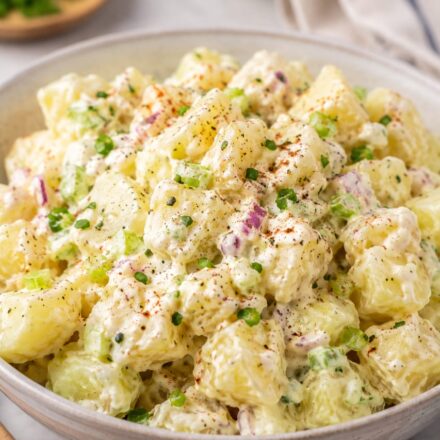
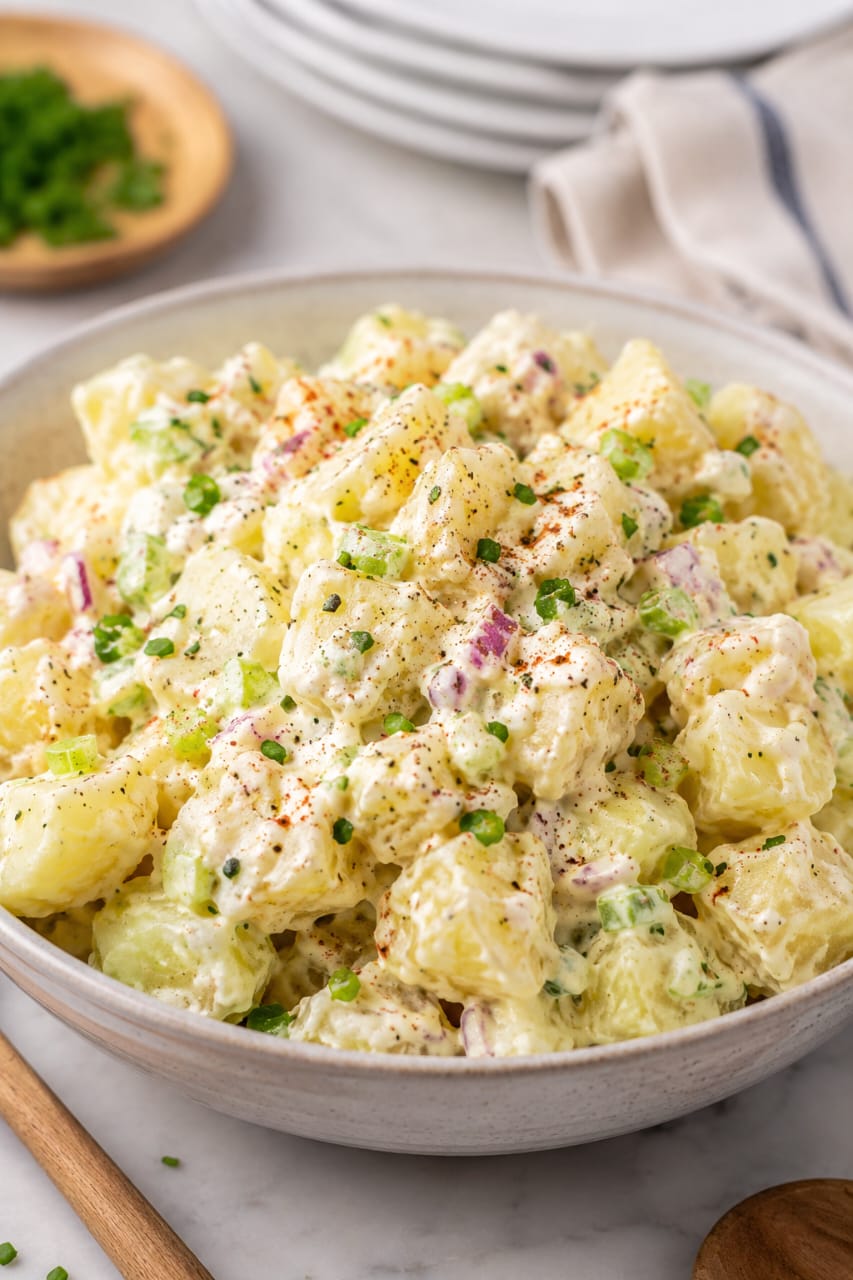
Creamy Potato Salad is a classic cold side dish made from tender, well-seasoned boiled potatoes tossed in a rich, tangy, creamy dressing made from mayonnaise, mustard, and a touch of vinegar, loaded with crunchy celery, dill pickles, red onion, and hard-boiled eggs, and finished with fresh herbs that bring everything together into one of the most satisfying and universally loved side dishes ever created.
Who Is This Recipe For?
This recipe is perfect for:
- Anyone who hosts cookouts or barbecues and needs a reliable, make-ahead side dish that serves a crowd beautifully and travels well without any reheating required
- Potato salad lovers who have been searching for a recipe that gets every element right — the texture of the potatoes, the creaminess of the dressing, and the balance of flavors throughout
- Families who want a classic, comforting side dish that works alongside grilled chicken, burgers, ribs, hot dogs, or virtually any main course without competing with it
- Meal preppers who want something they can make on Sunday that only gets better as the week goes on and works as a side for multiple different meals
- Beginner cooks who want a recipe that is genuinely simple to follow but produces results that taste like something made by someone who has been cooking potato salad for decades
- Potluck contributors who want to bring something that consistently draws compliments and gets people asking for the recipe before the event is even over
Equipment You Will Need
- A large pot for boiling the potatoes
- A colander for draining
- A large mixing bowl
- A medium bowl for making the dressing
- A sharp knife and cutting board
- Measuring cups and spoons
- A wooden spoon or large spatula for folding
- A small pot for boiling the eggs
- An airtight container for chilling and storing
Ingredients
For the Potatoes:
- 3 lbs Yukon Gold potatoes or red potatoes (these hold their shape better than russets after boiling and have a naturally buttery flavor)
- 1 tablespoon salt for the boiling water
- 1 tablespoon white vinegar or apple cider vinegar (added to the hot drained potatoes to season them from the inside while they are still warm)
For the Hard-Boiled Eggs:
- 4 large eggs
For the Creamy Dressing:
- 1 cup good quality mayonnaise
- 2 tablespoons yellow mustard
- 1 tablespoon Dijon mustard
- 2 tablespoons apple cider vinegar
- 1 tablespoon white sugar
- ½ teaspoon celery salt
- ½ teaspoon garlic powder
- ½ teaspoon onion powder
- ½ teaspoon black pepper
- Salt to taste
For the Mix-Ins:
- 3 stalks celery, finely diced
- ½ cup dill pickles, finely diced (plus 1 tablespoon of pickle brine stirred into the dressing)
- ¼ cup red onion, very finely diced
- 3 tablespoons fresh dill, chopped (or 1 teaspoon dried dill)
- 2 tablespoons fresh chives or green onions, thinly sliced
- 2 tablespoons fresh flat-leaf parsley, chopped
For Garnish:
- A light dusting of smoked paprika over the top
- Extra fresh dill or chives
- A few slices of hard-boiled egg arranged on top for presentation
How to Make Creamy Potato Salad
Step 1: Cook the Potatoes Properly
Wash and scrub your potatoes thoroughly. You can peel them completely, leave the skins on for a more rustic result, or peel them halfway — all three approaches work and it comes down to personal preference. Cut the potatoes into roughly 1 to 1.5 inch chunks — uniform sizing is important so every piece cooks at the same rate. Place the cut potatoes in your large pot and cover with cold water by at least an inch. Add the tablespoon of salt to the water. Starting potatoes in cold water rather than dropping them into already-boiling water allows them to cook more evenly from the outside in without the exterior becoming mushy before the center is cooked through. Bring the pot to a boil over high heat then reduce to a medium boil and cook for 12 to 15 minutes until the potatoes are just tender when pierced with a fork — they should slide off the fork easily but still hold their shape and not be falling apart.
Step 2: Season the Potatoes While Hot
Drain the cooked potatoes in your colander and transfer them immediately to your large mixing bowl. While the potatoes are still hot, drizzle the tablespoon of white vinegar or apple cider vinegar over them and toss gently. Hot potatoes are porous and absorb seasoning much more effectively than cold ones. This vinegar step seasons the potatoes from within and adds a subtle tang throughout the salad that you simply cannot achieve by adding vinegar only to the dressing. Spread the potatoes out slightly in the bowl and let them cool for about 20 to 30 minutes until they reach room temperature before adding the dressing.
Step 3: Hard-Boil the Eggs
Place the eggs in a small pot and cover with cold water by an inch. Bring to a full boil over medium-high heat. Once boiling, turn off the heat, cover the pot with a lid, and let the eggs sit in the hot water for exactly 11 minutes. Transfer them immediately to a bowl of ice water and let them sit for at least 10 minutes before peeling. This method gives you perfectly set yolks with no grey ring around the outside. Peel the cooled eggs and chop them into rough chunks — some people prefer small dice and others like larger pieces so they are visible and prominent in the salad. Either way works well.
Step 4: Make the Creamy Dressing
In your medium bowl, whisk together the mayonnaise, yellow mustard, Dijon mustard, apple cider vinegar, sugar, celery salt, garlic powder, onion powder, and black pepper until completely smooth and well combined. Add the tablespoon of pickle brine and whisk it in. Taste the dressing on its own — it should be tangy, slightly sweet, well-seasoned, and creamy with a good balance between the richness of the mayo and the brightness of the mustard and vinegar. Adjust the seasoning now before it goes on the potatoes. More vinegar if you want more tang, more sugar if it is too sharp, more salt if it needs depth.
Step 5: Combine Everything
Add the diced celery, dill pickles, red onion, fresh dill, chives, and parsley to the bowl of cooled potatoes and toss gently to distribute. Pour the dressing over everything and fold it in carefully using a large spatula or wooden spoon. You want to coat every piece of potato without breaking them down into mash. Fold rather than stir — gentle folding motions preserve the texture of the potatoes and keep the salad looking beautiful rather than turning into a bowl of mashed potato salad. Add the chopped hard-boiled eggs last and fold them in gently so they stay in recognizable pieces rather than crumbling completely into the dressing.
Step 6: Chill and Develop the Flavors
Taste the assembled salad and adjust seasoning one final time — it will likely need a touch more salt at this point since the potatoes absorb seasoning as the salad sits. Cover the bowl tightly with plastic wrap or transfer to an airtight container and refrigerate for at least 1 hour before serving. Two hours is better and overnight is best. The resting time allows the dressing to fully penetrate the potatoes, the flavors to meld together, and the salad to develop that deep, cohesive flavor that is the hallmark of a truly great potato salad.
Step 7: Garnish and Serve
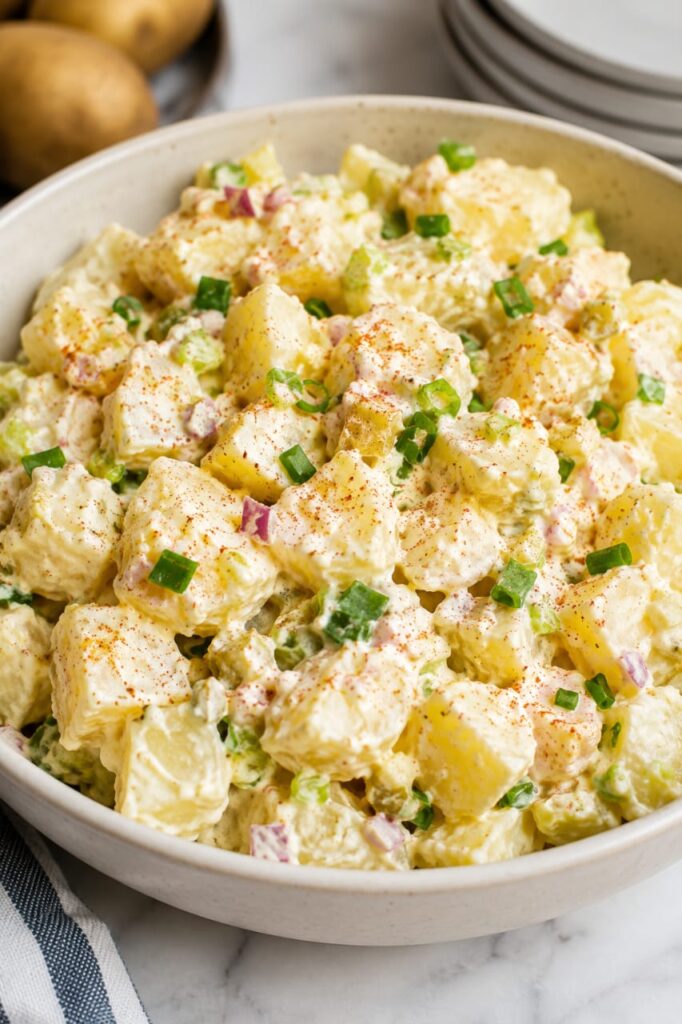
Right before serving, give the salad a gentle stir and taste it one more time. After chilling, the potatoes will have absorbed some of the dressing and the salad may look slightly less creamy than when you first assembled it — if so, stir in an extra spoonful of mayonnaise and a small splash of vinegar to freshen it up. Transfer to a serving bowl and dust the top with smoked paprika for that classic finishing touch. Arrange a few egg slices on top and scatter extra fresh dill or chives for a clean, attractive presentation.
What to Serve With Creamy Potato Salad
- Grilled or barbecued ribs — the cool, creamy potato salad against the smoky, sticky ribs is one of the greatest food pairings in the entire world of cookout food
- Fried chicken — another pairing that is so natural and so good that it barely needs explaining
- Burgers and hot dogs — potato salad is the default classic side for any burger or hot dog situation and it is that way for very good reason
- Grilled corn on the cob — together with potato salad they make the perfect cookout plate that feels complete without needing anything else
- Pulled pork sandwiches — the tangy creaminess of the potato salad cuts beautifully through the richness of slow-cooked pulled pork
- Baked beans — served alongside potato salad at a cookout creates a side dish spread that is deeply satisfying and universally loved
Cook Tips to Get It Right Every Time
1. Start potatoes in cold water. Always put your potato chunks into cold water and bring everything to a boil together rather than dropping them into already boiling water. Cold start cooking gives you more even results — the outside and inside of each potato chunk reach the right texture at the same time rather than the outside overcooking before the center is done.
2. Season the potatoes with vinegar while they are hot. This is one of the most important steps in the entire recipe and one that many people skip. Hot potatoes absorb liquid and seasoning into their interior. That vinegar soaked in while the potatoes are still hot seasons them from within and gives the finished salad a subtle, balanced tang that no amount of dressing adjustment can replicate after the potatoes have cooled.
3. Let the potatoes cool completely before dressing. Warm potatoes break down and turn mushy when mixed with mayonnaise-based dressing. They also absorb far more dressing than cold potatoes, leaving the finished salad dry and over-absorbed by the time it is served. Room temperature or slightly warm is the sweet spot — not steaming hot and not refrigerator cold.
4. Use Yukon Gold or red potatoes rather than russets. Russet potatoes are wonderful for baking and mashing but they are too starchy and fall apart too easily for potato salad. Yukon Golds and red potatoes hold their shape beautifully after boiling, have a naturally buttery, slightly waxy texture, and give you the distinct chunks of potato in the finished salad that make every bite satisfying.
5. Add pickle brine to the dressing. This is a small detail that makes a meaningful difference. The brine from the pickle jar is tangy, slightly salty, and adds a depth to the dressing that you cannot get from vinegar alone. A tablespoon stirred into the dressing brings the whole thing together in a way that makes people taste the salad and immediately know something is making it better than the usual version without being able to put their finger on exactly what it is.
6. Always make it ahead and chill it properly. Potato salad that has sat in the fridge for at least an hour — and ideally two or overnight — tastes dramatically better than potato salad served immediately after assembly. The resting time is when everything comes together. The potatoes absorb the dressing, the flavors meld, the herbs infuse into everything, and the salad develops that deep, cohesive, satisfying quality that makes it genuinely great rather than just decent.
Storage Tips
- Refrigerator: Store in an airtight container in the fridge for up to 4 to 5 days. The flavors continue to develop and deepen over the first day or two, often making the salad taste even better on day two than it did on day one.
- Before serving from the fridge: After refrigeration the salad will look denser and the dressing will have been partially absorbed by the potatoes. Stir in an extra spoonful of mayonnaise and a small splash of apple cider vinegar right before serving to freshen and loosen the dressing back to the right creamy consistency.
- Freezer: Creamy potato salad does not freeze well at all. The mayonnaise-based dressing separates completely after freezing and thawing and the potato texture becomes waterlogged and unpleasant. Make it fresh and enjoy it within the refrigerator storage window.
- Food safety at gatherings: Do not leave potato salad sitting out at room temperature for more than 2 hours and reduce that to 1 hour in hot weather above 90°F. Keep it on ice or in a cooler at outdoor events to maintain a safe temperature throughout the gathering.
- Make ahead tip: This salad is genuinely best when made a full day ahead. Assemble everything, cover tightly, refrigerate overnight, and add the garnish right before serving. The difference in flavor between freshly made and overnight-rested potato salad is significant and entirely in favor of the overnight version.
Frequently Asked Questions
1. What is the best type of potato for potato salad and does it really matter? It matters quite a lot. Yukon Gold potatoes are widely considered the best choice for creamy potato salad because they have a naturally buttery flavor, a slightly waxy texture that holds its shape after boiling, and a thin skin that is pleasant to eat even when left on. Red potatoes are another excellent option with a similar waxy texture. Russet potatoes are too starchy and break apart too easily during mixing, resulting in a mushy, uneven texture in the finished salad. Stick with Yukon Gold or red potatoes for the best result every time.
2. Can I make this recipe without mayonnaise? Yes. Replace some or all of the mayonnaise with plain Greek yogurt for a lighter, tangier version that still has plenty of creaminess. A half-and-half mix of mayonnaise and Greek yogurt is a popular middle ground that reduces the richness slightly while maintaining the classic creamy character. You can also use sour cream in place of some of the mayo for a slightly different flavor profile that works beautifully with the dill and pickles in this recipe.
3. Why does my potato salad always turn out watery? Watery potato salad is almost always caused by one of two things. Either the potatoes were not drained thoroughly enough after boiling and carried excess water into the salad, or the vegetables added to the salad — especially celery and pickles — released moisture into the dressing over time. To prevent this, drain the potatoes very thoroughly and let them steam-dry in the colander for a few minutes after draining. Pat the diced celery and pickles lightly with a paper towel before adding them to remove surface moisture.
4. Can I add bacon to this potato salad? Absolutely and it is one of the most popular additions. Cook 6 strips of bacon until crispy, drain on paper towels, and crumble or chop them into small pieces. Fold them into the salad right before serving rather than mixing them in ahead of time so they stay crispy rather than going soft in the dressing. Bacon adds a smoky, salty crunch that plays wonderfully against the creamy, tangy dressing.
5. How do I make potato salad for a very large crowd? This recipe scales up very easily. Simply multiply all the ingredients by however much you need and keep the ratios exactly the same. One practical tip for large batches — make the dressing separately and add it to the potatoes and mix-ins gradually rather than all at once, tasting as you go, because large quantities of potato can vary in how much dressing they absorb depending on the specific potatoes used. Start with three quarters of the dressing, toss and taste, then add more as needed.
Final Thoughts
Creamy Potato Salad is one of those dishes that seems effortless when it is done well but has real craft behind it that makes all the difference between something forgettable and something that people request by name every time there is a gathering. The details matter here — the cold water start for the potatoes, the hot vinegar seasoning right after draining, the balance of the dressing, the quality of the mix-ins, and the patience to let it chill properly before serving.
When you get all of those things right together, what you end up with is a potato salad that has perfectly textured chunks of potato with seasoning all the way through, a creamy, tangy, well-balanced dressing that coats everything without being heavy or cloying, crunchy celery and pickles for texture, rich, creamy egg pieces distributed throughout, and fresh herbs that brighten the whole thing and make it taste alive rather than flat.
That is the potato salad people remember. That is the one that gets talked about at the end of the cookout when everyone is saying what their favorite thing was. Make this recipe once with all the details intact and it will become your permanent go-to version that you make for every occasion from this point forward without question.