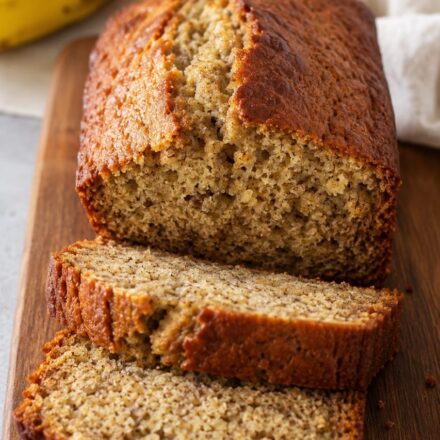
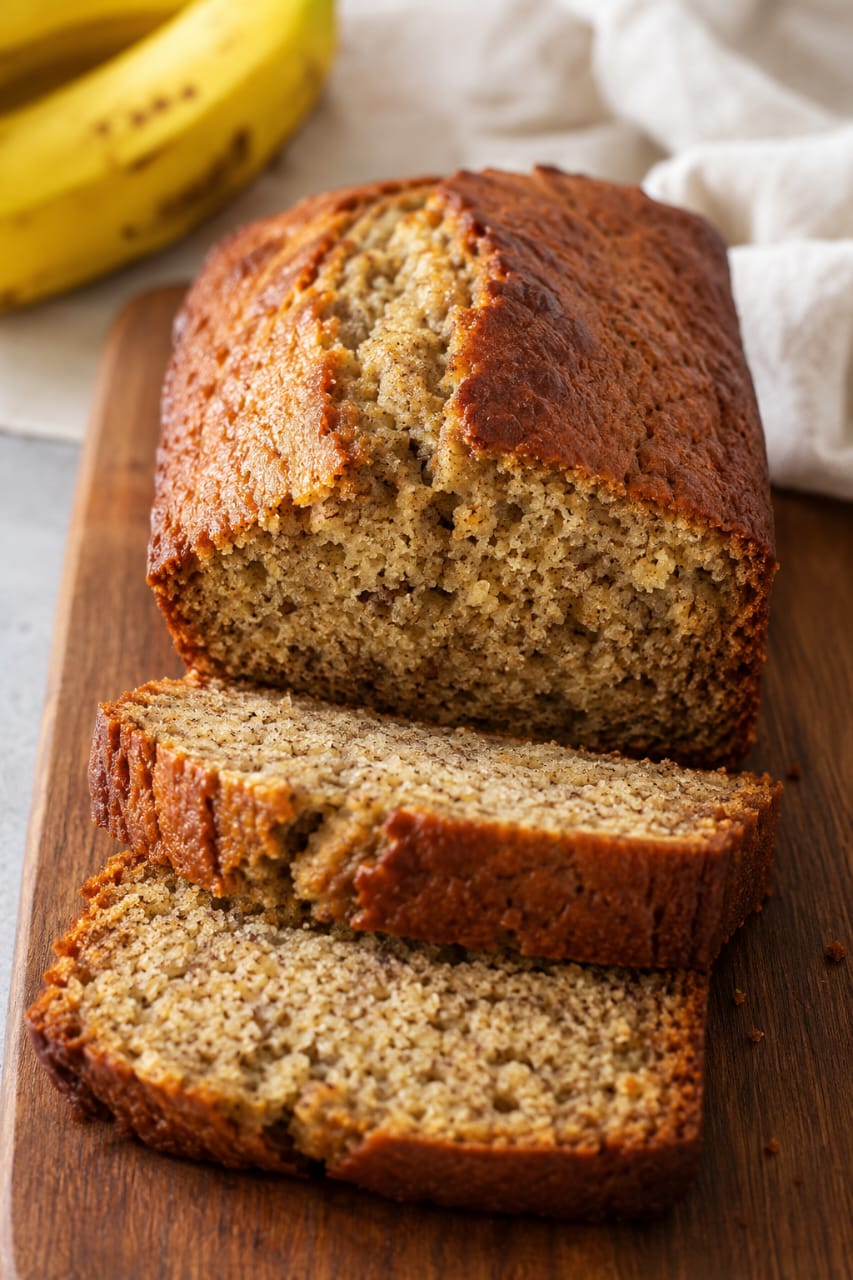
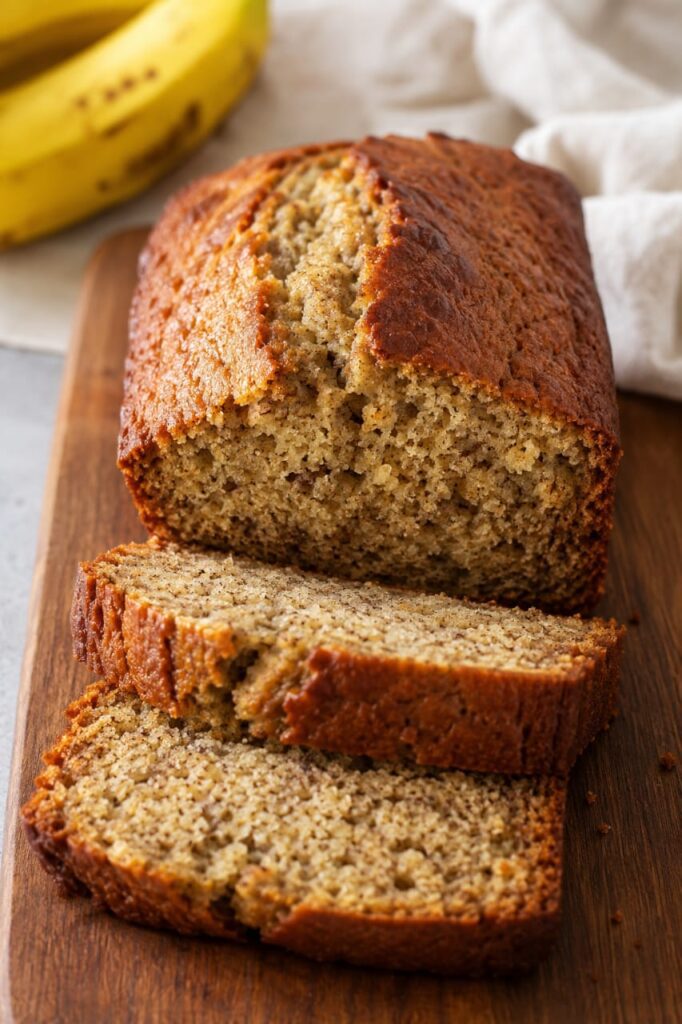
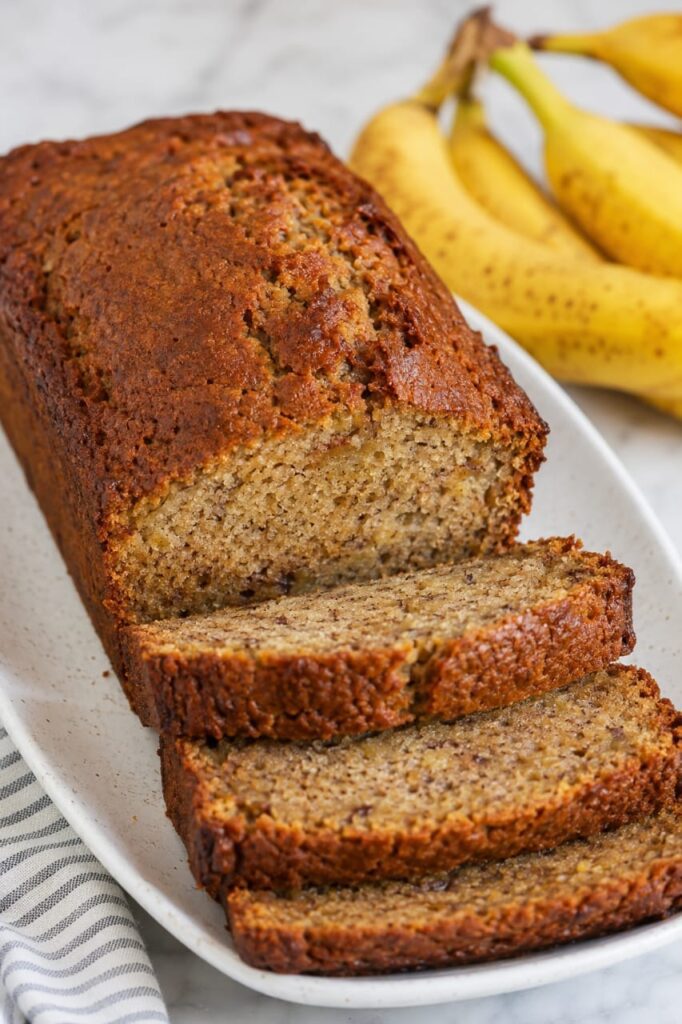
If there is one baked good that every single person seems to love without exception, it is a perfectly made banana bread. Not the dry, dense, barely banana-flavored kind that crumbles when you slice it — but the real kind. The kind with a deeply golden, slightly crackled top, a tender, moist crumb that stays soft for days, and a banana flavor so rich and pronounced that it fills the whole house with the most incredible smell while it bakes. That is exactly what this recipe delivers every single time.
This is the banana bread recipe you make when you want to get it right. The one that becomes your permanent go-to from the very first loaf.
Quick Recipe Overview
| 📌 Detail | ℹ️ Info |
|---|---|
| 🍽️ Recipe Name | Moist Banana Bread |
| 👥 Best For | Breakfast, snacking, brunch, gifting, using overripe bananas |
| ⏱️ Prep Time | 10–15 minutes |
| 🔥 Cook Time | 55–65 minutes |
| 📊 Difficulty | Very Easy |
| 🍴 Servings | 10–12 slices |
| 🔥 Calories | ~210–240 kcal per slice |
| 💪 Protein | ~3–4g per slice |
| 🌾 Carbohydrates | ~32–36g per slice |
| 🥑 Fats | ~8–10g per slice |
| 🌿 Fiber | ~1–2g per slice |
| 🍬 Sugar | ~16–20g per slice |
Moist Banana Bread is a classic quick bread made with very ripe mashed bananas, brown sugar, butter, eggs, and a simple blend of warm spices that bakes into a deeply flavorful, incredibly tender loaf with a golden crackled top and a soft, moist interior that stays fresh for days. It is one of the most forgiving, foolproof baking recipes in existence and produces consistently outstanding results every single time.
Who Is This Recipe For?
This recipe is perfect for:
- Anyone with overripe bananas sitting on the counter who wants to turn them into something genuinely spectacular rather than throwing them away
- Beginner bakers who want a completely reliable, forgiving recipe that teaches fundamental baking technique while delivering impressive results
- Families who want a wholesome, universally loved baked good that works equally well for breakfast, an afternoon snack, or dessert
- Anyone who has made banana bread before and been disappointed by a dry, dense, or bland result and deserves a recipe that actually gets every element right
- Home bakers looking for a great gift — a loaf of truly great homemade banana bread wrapped nicely is one of the most thoughtful, universally appreciated things you can bring to someone
Equipment You Will Need
- A 9×5 inch loaf pan
- Parchment paper or nonstick cooking spray
- A large mixing bowl
- A medium mixing bowl
- A fork or potato masher for mashing bananas
- A whisk and rubber spatula
- Measuring cups and spoons
- A wire cooling rack
- A toothpick for testing doneness
Ingredients
For the Banana Bread:
- 3 very ripe bananas (the riper and more speckled the better — almost black bananas give the most intense banana flavor and natural sweetness)
- ⅓ cup unsalted butter, melted and slightly cooled
- ¾ cup brown sugar, packed (brown sugar adds more moisture and a deeper caramel flavor than white sugar)
- 2 large eggs, room temperature
- 1 teaspoon vanilla extract
- 1½ cups all-purpose flour
- 1 teaspoon baking soda
- ½ teaspoon baking powder
- ½ teaspoon salt
- 1 teaspoon ground cinnamon
- ¼ teaspoon ground nutmeg
- ¼ cup sour cream or plain Greek yogurt (this is the secret to an exceptionally moist crumb that stays soft for days)
Optional Mix-Ins:
- ½ cup chopped walnuts or pecans
- ½ cup chocolate chips or dark chocolate chunks
- ¼ cup shredded coconut
- 1 tablespoon espresso powder for a mocha banana bread variation
- ½ teaspoon cardamom for an aromatic twist
Optional Topping:
- 1 banana sliced lengthwise and laid on top of the batter before baking for a beautiful presentation
- A sprinkle of brown sugar across the top before baking for an extra caramelized crust
- A handful of chopped walnuts scattered across the top
How to Make Moist Banana Bread
Step 1: Prepare the Pan and Preheat
Preheat your oven to 350°F (175°C). Grease your 9×5 inch loaf pan generously with butter or nonstick cooking spray and line the bottom and long sides with a strip of parchment paper, leaving an overhang on both sides. This parchment sling is what allows you to lift the finished loaf cleanly out of the pan without any sticking or tearing. Set the prepared pan aside.
Step 2: Mash the Bananas
Peel the ripe bananas and place them in your large mixing bowl. Mash them thoroughly with a fork or potato masher until you have a smooth, mostly lump-free puree. A few small lumps are completely fine and actually add lovely little bursts of banana flavor throughout the finished loaf. Do not undermash — chunks that are too large create wet pockets in the crumb that affect the texture of the finished bread. The bananas should be fully mashed and fluid, almost like a thick puree, before anything else is added.
Step 3: Mix the Wet Ingredients
Add the melted butter to the mashed bananas and stir together until combined. Add the brown sugar and stir until it is fully dissolved into the banana and butter mixture. Add the eggs one at a time, stirring well after each addition. Add the vanilla extract and the sour cream or Greek yogurt and stir everything together until the mixture is smooth, glossy, and well combined. The sour cream is what sets this recipe apart from basic banana bread recipes — it adds fat, moisture, and a very subtle tang that makes the finished loaf dramatically more tender and moist than versions made without it.
Step 4: Mix the Dry Ingredients
In your medium mixing bowl, whisk together the flour, baking soda, baking powder, salt, cinnamon, and nutmeg until evenly combined. Whisking the dry ingredients separately before adding them to the wet ingredients ensures the baking soda, baking powder, and spices are evenly distributed throughout the flour so the bread rises evenly and every slice has the same flavor and texture.
Step 5: Combine Wet and Dry
Add the dry ingredients to the wet banana mixture and fold gently with your rubber spatula until just combined. This is the most critical step in the entire recipe and the one that most affects the final texture. Fold with slow, deliberate strokes and stop the moment you no longer see any dry streaks of flour in the batter. The batter will look a little rough and uneven and that is exactly right. Overmixing develops gluten in the flour and turns the bread tough, dense, and rubbery — the opposite of the tender, moist loaf you are going for. If you are adding mix-ins like walnuts or chocolate chips, fold them in with the last few strokes so they are just distributed throughout.
Step 6: Fill the Pan and Add Toppings
Pour and scrape the batter into your prepared loaf pan and spread it into an even layer using the spatula. If you are topping with a halved banana, brown sugar, or chopped nuts, add them now. The halved banana laid cut-side up on the surface of the batter creates one of the most beautiful, bakery-worthy presentations a homemade loaf can have and caramelizes into something deeply golden and sweet during baking.
Step 7: Bake the Bread
Place the loaf pan in the center of the preheated oven and bake for 55 to 65 minutes. At the 45-minute mark, check the top — if it is browning faster than you want, lay a loose sheet of aluminum foil over the top of the pan for the remaining baking time. The loaf is done when the top is deeply golden and crackled, a toothpick inserted into the very center comes out clean or with just a few moist crumbs attached, and the edges of the loaf have pulled slightly away from the sides of the pan. Different ovens vary so start checking at the 55-minute mark rather than waiting for the full 65 minutes.
Step 8: Cool Before Slicing
This step requires genuine patience and it matters enormously. Remove the loaf from the oven and let it cool in the pan on a wire rack for 15 minutes. Then use the parchment paper handles to lift it out of the pan and let it cool directly on the rack for at least another 30 to 45 minutes before slicing. Slicing into banana bread that has not fully cooled results in a gummy, wet interior that looks underbaked even when it is not — the structure of the bread needs that cooling time to finish setting completely. The wait is frustrating but the result of a cleanly sliced, perfectly textured loaf is completely worth it.
What Goes Well With Moist Banana Bread
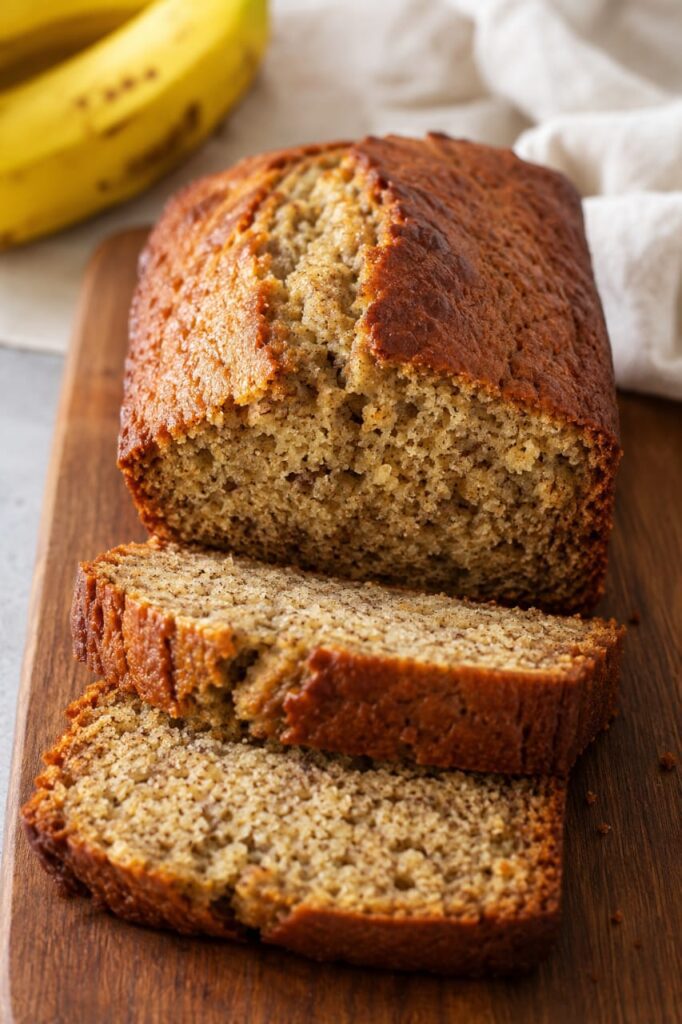
- Salted butter spread generously on a warm slice is the most classic, most beloved pairing and the one that needs absolutely no improvement or addition
- Peanut butter or almond butter spread thickly on a slice turns banana bread into a genuinely satisfying, protein-rich breakfast that keeps you full for hours
- Cream cheese — plain or with a little honey stirred through — adds a cool, slightly tangy richness that pairs beautifully with the warm spices in the bread
- A hot cup of coffee or tea alongside a slice of banana bread is a morning combination that feels genuinely luxurious in its simplicity
- Vanilla ice cream served alongside a slightly warm slice turns this into a dessert that is far greater than the sum of its very simple parts
Cook Tips to Get It Right Every Time
1. The riper the bananas, the better the bread. This is the single most important factor in making great banana bread. Bananas that are just turning yellow give you very little flavor and very little natural sweetness. Bananas that are fully brown or even almost black are sweeter, softer, more aromatic, and produce a dramatically more flavorful loaf. If your bananas are not ripe enough, place them unpeeled on a baking sheet in a 300°F oven for 15 to 20 minutes until the skins turn black and the interior is soft and sweet.
2. Do not skip the sour cream. The sour cream or Greek yogurt in this recipe is not an optional addition — it is the ingredient that makes this banana bread noticeably more moist and tender than recipes that do not include it. The fat and slight acidity in the sour cream tenderize the crumb and help retain moisture throughout the baking process and during storage. Do not leave it out.
3. Never overmix. The rule of not overmixing applies to every quick bread and muffin recipe but is especially important for banana bread because the wet, heavy nature of the batter already puts some stress on the gluten structure. Fold only until the flour streaks disappear and stop immediately. Your batter should look slightly lumpy and uneven when it goes into the pan and that is perfectly correct.
4. Use brown sugar instead of white. Brown sugar contains molasses which adds moisture, depth, and a subtle caramel-like flavor that white sugar simply does not have. It contributes significantly to both the flavor and the moistness of the finished loaf. Using all white sugar is a noticeable downgrade in both departments.
5. Test doneness with a toothpick in the center. The center of a banana bread loaf is always the last part to cook through and is the most reliable place to test. A toothpick inserted into the very middle should come out clean or with just a few moist crumbs. If it comes out with wet batter on it, give the loaf another 5 to 8 minutes and test again.
6. Cool completely before wrapping for storage. Wrapping banana bread while it is still even slightly warm traps steam inside the wrapping and creates condensation that makes the crust soft, wet, and slightly gummy. Wait until the loaf is completely cooled all the way through before wrapping or storing.
Storage Tips
- Room temperature: Wrap the completely cooled loaf tightly in plastic wrap or store in an airtight container at room temperature for up to 4 days. The flavor and moisture actually improve on day two as everything settles and melds together.
- Refrigerator: Banana bread keeps well in the fridge for up to 1 week wrapped tightly. Bring slices to room temperature before eating or warm them briefly in the microwave for 15 to 20 seconds to restore that fresh-baked softness.
- Freezer: Banana bread freezes beautifully for up to 3 months. Slice the completely cooled loaf first, wrap individual slices in plastic wrap, then place in a freezer bag. Pull out individual slices as needed and thaw at room temperature for 30 minutes or microwave from frozen for 45 to 60 seconds.
- Make ahead tip: Banana bread is one of the best baked goods to make a day ahead. The flavor genuinely deepens overnight and the loaf is noticeably more moist and flavorful on day two than it is on the day it was baked.
Frequently Asked Questions
1. Can I make banana bread without eggs? Yes. Replace each egg with one of the following — a flax egg made from one tablespoon of ground flaxseed mixed with three tablespoons of water rested for 5 minutes, or ¼ cup of unsweetened applesauce per egg. Both work as effective binding agents. The texture will be slightly denser than the egg version but still moist and delicious. The applesauce version adds a very subtle apple note that actually complements the banana flavor quite nicely.
2. Can I use frozen bananas? Absolutely and frozen bananas are actually ideal for banana bread. When bananas are frozen and then thawed they become very soft, very sweet, and release a lot of liquid which makes them incredibly easy to mash and incorporate into the batter. Thaw them completely at room temperature or overnight in the fridge, then drain off any excess liquid before mashing. The flavor they contribute to the finished loaf is outstanding.
3. Why did my banana bread sink in the middle? A sunken center is almost always caused by one of three things. The bread was underbaked and removed from the oven before the center had set, the oven temperature was too low resulting in the outside cooking faster than the center, or too much leavening was used which caused the bread to rise quickly and then collapse before the structure had time to set. Always test with a toothpick in the very center before removing from the oven, make sure your oven is properly calibrated to 350°F, and measure the baking soda precisely.
4. Can I make banana bread muffins with this recipe? Yes and they work beautifully. Line a 12-cup muffin tin with paper liners and fill each cavity about three quarters full. Bake at 350°F for 18 to 22 minutes until a toothpick comes out clean. Everything else about the recipe stays exactly the same. Banana bread muffins are wonderful for meal prep and portion control and make a perfect grab-and-go breakfast option throughout the week.
5. Can I reduce the sugar in this recipe? Yes. The brown sugar can be reduced to ½ cup without significantly affecting the texture or moisture of the finished bread, especially if your bananas are very ripe and naturally sweet. Going below ½ cup of sugar may start to affect the moisture level slightly since sugar contributes to tenderness in baked goods beyond just sweetness. If you want a less sweet loaf, reduce to ½ cup brown sugar and rely on the natural sweetness of very ripe bananas to carry the flavor.
Final Thoughts
Moist Banana Bread is one of those recipes that earns its permanent place in your baking collection from the very first loaf. It is forgiving enough for complete beginners, reliable enough to make without thinking twice, and delicious enough that it genuinely impresses people every single time it appears on the table.
The combination of very ripe bananas, brown sugar, butter, sour cream, and warm spices creates a loaf that is deeply flavorful, incredibly moist, and tender in a way that holds up for days rather than going stale by the next morning. Every element in the recipe has a purpose and every detail — from the ripeness of the bananas to the gentleness of the mixing to the patience of the cooling time — contributes to the final result.
Make it once and it will become the recipe you turn to every single time those bananas on your counter start to get a little too ripe. Which, if you are anything like most home bakers, is going to be very soon and very regularly.